
Your Estrogen Equation: From Grandmother to Daughter: Mapping Hormones Across Generations
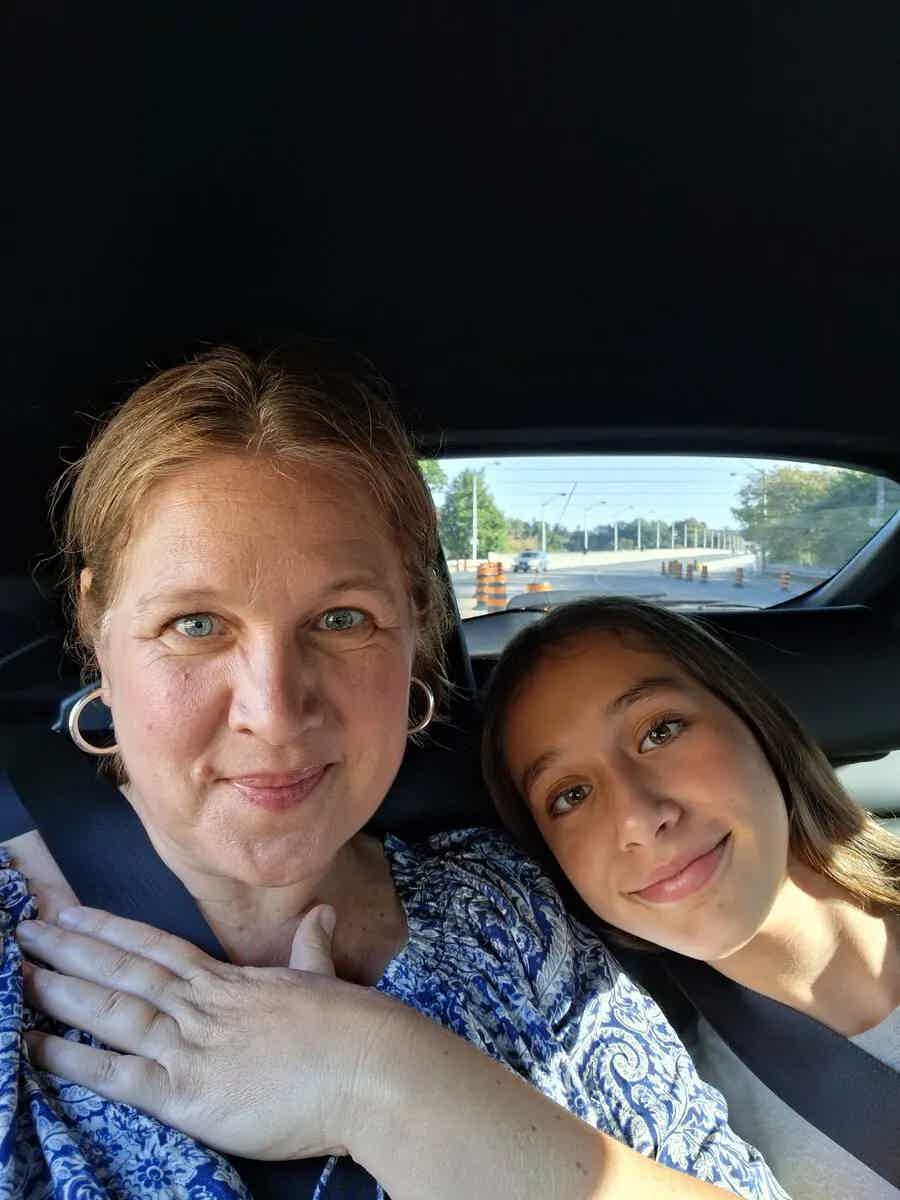
My daughter got her period almost four years earlier than I did.
I was almost fifteen; she was eleven.
It’s the kind of thing that stops you, not because it’s unusual anymore, but because of what it represents.
Our bodies are writing their hormonal timelines earlier, and I wonder every day what that means for her health, her hormones, and the way estrogen will shape her life.
I’m already anxious about the endless Sephora products she wants to use and find myself scanning ingredient lists, calculating exposure, doing mental risk assessments over skin creams and nail polish. I know this isn’t sustainable, for her or for me. I want to guide her with knowledge, not fear. But even as a naturopathic doctor, I have to admit: it’s complicated.
The Estrogen Equation
Estrogen is more than a hormone; it’s a story of timing, exposure, and sensitivity.
When puberty arrives earlier, that story starts sooner and total lifetime estrogen exposure increases.
Research shows that earlier menarche is linked to slightly higher risks for certain estrogen-sensitive conditions later in life; breast and endometrial cancers¹.
Genetics, body composition, environmental factors, and stress all play roles in when and how this hormonal chapter begins. My daughter is half Hispanic, and in her father’s family, most women started menstruating early. Ethnicity, nutrition, and family patterns all matter, they’re part of our “equation.”
Then there’s my maternal grandmother. She had her last child at forty-three and developed estrogen-related breast cancer in her sixties. Another variable.
And me, later puberty, pregnancies in my mid-30s and early 40s, and fertility treatments involving high-dose hormonal medications for IVF, which temporarily shifted my estrogen exposure.
Our family’s estrogen equation spans generations, shaped by genetics, culture, life choices, and medical interventions.
Pregnancy and the Peaks
Pregnancy brings one of the most dramatic hormonal shifts in a woman’s life.
Recent research confirms that pregnancy represents one of the highest exposures to estrogen across the lifespan. In a study of 35,498 postmenopausal women, the median reproductive lifespan was about 33 years, with median cumulative endogenous estrogen exposure of ~28.5 years¹. Each additional year of reproductive lifespan, influenced by factors like early menarche, late menopause, or number of pregnancies, was associated with modest reductions in cardiometabolic risk, showing that timing and quantity of estrogen matter in nuanced ways.
These surges don’t simply “add up” to more exposure; they remodel how tissues respond. Early pregnancies and breastfeeding have been associated with reduced lifetime breast cancer risk², while later pregnancies, like mine and my grandmother’s, extend the hormonal timeline differently. Fertility treatments and delayed pregnancies add layers that weren’t part of earlier generations’ equations.
Each generation of women in our family, from late bloomers to early starters, with varied pregnancy timing and reproductive interventions, has had her own version of estrogen’s story. Seeing it all laid out makes me appreciate how individualized these hormonal journeys truly are.
Medical Awareness Matters
Through my clinical practice, I’ve also learned how nuanced estrogen exposure can be. Topical estrogen therapy , which many women consider for menopause symptoms, was recently updated by the FDA to remove the black-box warning about breast cancer risk. This reflects the evolving science: not all estrogen is equal, and dose, form, and context matter.
Even as a practitioner, it reminds me that knowledge is power, and awareness is what allows us to make choices that are safe, realistic, and individualized.

Living the Knowledge
As a mother and clinician, I also know the daily reality:
- The plastic containers, the not eaten broccoli, the stress of school mornings, and the small victories when my daughter chooses water over Starbucks (never actually happens).
So we try to live the balance, not perfectly, but consciously.
We talk about how our bodies use food to clear what they don’t need.
We try and keep good bowel habits, cook real food, and move our bodies because it helps our hormones, not because it’s a rule.
We try to choose cleaner products without pretending we can avoid every chemical.
It’s not about control, it’s about awareness without fear.
That, I’m learning, is the real work of generational health;
to inherit knowledge and transform it into calm, practical care.
Because the estrogen equation isn’t just biological, it’s emotional, cultural, and deeply personal.
And maybe the best thing I can teach my daughter isn’t only how to lower her exposure, but how to live in harmony with her own hormonal story.
🥦 What small daily habits could you introduce to support your hormonal health and model them for the next generation?
With curiosity & care,
Dr. Meghan

Everyday Ways to Support Healthy Estrogen Balance: For Moms and Daughters
After thinking deeply about my daughter’s early period and our family’s estrogen history, I realized something: it’s not just about how long estrogen flows through our lives, but how we live with it day to day.
As a naturopathic doctor, I know the science: estrogen is cleared through the liver and bowels, influenced by nutrition, movement, and environmental exposures. But as a mom, I also know the reality: life is messy, schedules are tight, and sometimes broccoli and sleep don’t always happen.
So here’s what works for us, simple, practical, realistic ways to support healthy estrogen balance without fear or perfectionism.
1. Nourish the Liver and Support Detoxification
- Your liver is the main hub that metabolizes estrogen.
- You can support it naturally with: Cruciferous vegetables: broccoli, kale, cauliflower, cabbage. These contain compounds (like DIM and indole-3-carbinol) that help estrogen metabolism.
- B-complex foods: whole grains, eggs, legumes, they support methylation pathways.
- Antioxidant-rich fruits and vegetables: berries, leafy greens, citrus.
Mom reality check: We don’t eat perfectly every day. Even a few servings of veggies in a smoothie or roasted at dinner counts.
2. Keep Things Moving
- Regular movement encourages circulation, helps hormone balance, and supports healthy weight.
- Even simple daily activity counts: walking the dog, stretching with your kids, or dancing to Spotify playlists in the kitchen.
3. Good Bowel Habits Matter
- Estrogen is excreted through bile into the intestines. When bowel movements are slow or irregular, estrogen can be reabsorbed.
- Fiber from vegetables, fruits, whole grains, beans, and seeds helps keep things moving.
- Hydration is key. Water is often the simplest way to support regularity.
4. Be Mindful of Environmental Estrogen Exposure
- Choose fragrance-free or cleaner personal care products when possible.
- Avoid heating food in plastic; opt for glass or stainless steel.
- It’s impossible to avoid all xenoestrogens. The goal is awareness and small, consistent choices rather than perfection.
5. Support Hormone-Friendly Sleep and Stress Management
- Estrogen metabolism works best when your body isn’t stressed.
- Prioritize sleep when you can (even short naps are restorative).
- Stress-reducing practices; meditation, yoga, walking, journaling, or even simply taking a few deep breaths can help your hormones balance naturally.
6. Talk Openly With Your Daughter
- Make hormone education a part of everyday life, not a lecture.
- Explain that our bodies naturally detox and balance estrogen, but choices like movement, food, and sleep help it work better.
- Normalize the conversation: periods, products, stress - all of it.
Mom + Doctor Reality Check
I don’t do everything perfectly. We still have pizza nights, forget our greens, and sometimes have an afternoon sugar rush. That’s okay. Awareness and consistency over perfection is what counts.
Raising a daughter in this generation means walking a balance: using clinical knowledge to inform everyday choices, without letting fear control our parenting.
Because healthy estrogen balance isn’t just about biology, it’s about creating habits, awareness, and resilience for the whole family.
Footnotes
Early menarche and estrogen-related risks:
Numerous studies have found that earlier menarche (before age 12) is associated with higher lifetime estrogen exposure and modestly increased risk of estrogen-sensitive cancers.
Collaborative Group on Hormonal Factors in Breast Cancer, Lancet Oncology, 2012;13(11):1141–1151.
Pregnancy estrogen exposure:
Pregnancy represents one of the highest hormonal exposures in a woman’s life. Recent research on postmenopausal women calculated lifetime endogenous estrogen exposure by considering reproductive lifespan, pregnancies, and lactation. Among 35,498 women, the median reproductive lifespan was ~33 years, with median endogenous estrogen exposure of ~28.5 years. Each additional year of reproductive lifespan was associated with lower cardiometabolic risk.
Zhu Y. et al., “Reproductive history and cardiometabolic disease: the role of endogenous estrogen exposure across the lifespan in postmenopausal women,” BMC Women’s Health, 2025; 25:35.
Pregnancy, breastfeeding, and breast cancer risk:
Early first pregnancy and breastfeeding reduce lifetime breast cancer risk, while delayed or fewer pregnancies slightly increase it.
Collaborative Group on Hormonal Factors in Breast Cancer, Lancet, 2002;360(9336):187–195.
Topical estrogen therapy:
The FDA announced in November 2025 that it is removing the black-box warning regarding breast cancer risk for low-dose vaginal and topical estrogen therapy, reflecting evidence that these formulations have minimal systemic absorption and lower associated risk. FDA Announcement, 2025